Betty's Blueprint: Lessons in Land Care
Lucía Torres ·
Listen to this article~4 min
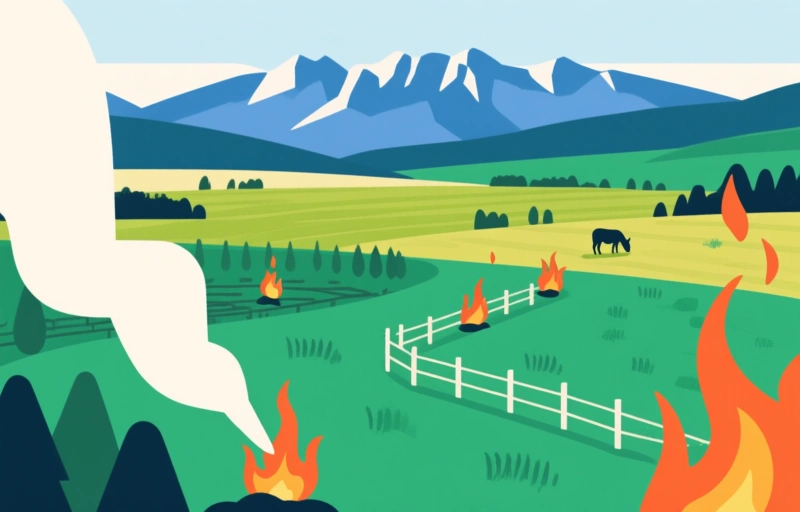
Discover how biologist Betty Falxa transformed nearly 3,000 acres in Wyoming's Bighorn Mountains using controlled burns, strategic fencing, and a carefully timed grazing plan that left the land measurably better.
When Betty Falxa first surveyed her nearly 3,000 acres in Wyoming's Bighorn Mountains, she wasn't thinking like a buyer. She was thinking like a steward. Armed with a master's degree in biology and decades of experience as a naturalist, she set out to do something rare: leave the land measurably better than she found it. Through controlled burns, strategic fencing, water development, and a carefully timed grazing plan, she built a working blueprint that transformed both habitat and heritage. Her story isn't just inspiring — it's transferable. Read how Betty's methods can inform your own approach to land stewardship.
### The Biology Behind the Blueprint
Betty didn't just wing it. She came armed with science. Her background in biology gave her a deep understanding of how ecosystems tick. She knew that a healthy range isn't just grass — it's a web of soil microbes, native plants, insects, birds, and large mammals all working together. So she started by observing. She walked her land in every season, noting where water pooled, where erosion threatened, and which plants thrived where. That groundwork paid off.

### Controlled Burns: Letting Fire Do Its Job
One of Betty's first big moves was reintroducing fire. In many parts of the West, fire has been suppressed for over a century, which leads to overgrown brush and unhealthy forests. Betty worked with local fire experts to plan controlled burns. These weren't raging wildfires — they were carefully managed blazes that cleared dead undergrowth, released nutrients into the soil, and encouraged new growth. The result? Richer forage for wildlife and livestock alike, and a landscape that's more resilient to actual wildfires.
### Strategic Fencing and Water Development
Betty also invested in fencing — but not the kind that just marks property lines. She built cross-fencing to create smaller pastures. This let her rotate livestock more precisely, mimicking the natural movement of bison herds. When animals graze one area hard and then move on, the grass gets time to recover. She also developed water sources, digging ponds and installing solar-powered pumps to bring water to dry corners of the ranch. That meant her cattle could graze more evenly, and wildlife had reliable water year-round.
### A Carefully Timed Grazing Plan
Here's where Betty's approach really shines. She didn't just turn cattle out in spring and hope for the best. She mapped out a grazing schedule that matched the growth cycles of native grasses. She'd move cattle into a pasture when the grass was at its peak, let them graze it down, then move them out before the grass was overgrazed. That left enough leaf area for quick regrowth. It also kept the soil covered, which prevented erosion and held moisture.
- **Key takeaway**: Timing matters. Graze too early and you damage root systems. Graze too late and the grass gets woody and less nutritious. Betty found the sweet spot.
- **Result**: Her pastures became more productive, her cattle healthier, and the land's biodiversity increased.
### What You Can Learn From Betty
Betty's story isn't just for Wyoming ranchers. It's for anyone who manages land — whether you've got 10 acres or 10,000. The principles are simple: observe first, act second. Use science to guide decisions. Invest in infrastructure that supports both production and conservation. And always think long-term.
> "I'm not just managing for this year," Betty once said. "I'm managing for the next generation."
That mindset is what separates stewardship from exploitation. It's also what makes Betty's blueprint so powerful. It's not a one-size-fits-all formula. It's a way of thinking that you can adapt to your own land, your own goals, and your own challenges.
So whether you're looking to improve wildlife habitat, boost forage production, or just leave the land better than you found it, take a page from Betty's playbook. Start by listening to the land. Then act with purpose.