From City Rush to Coastal Calm: A Family's Journey to Slower Living
Eleanor Vance ·
Listen to this article~5 min
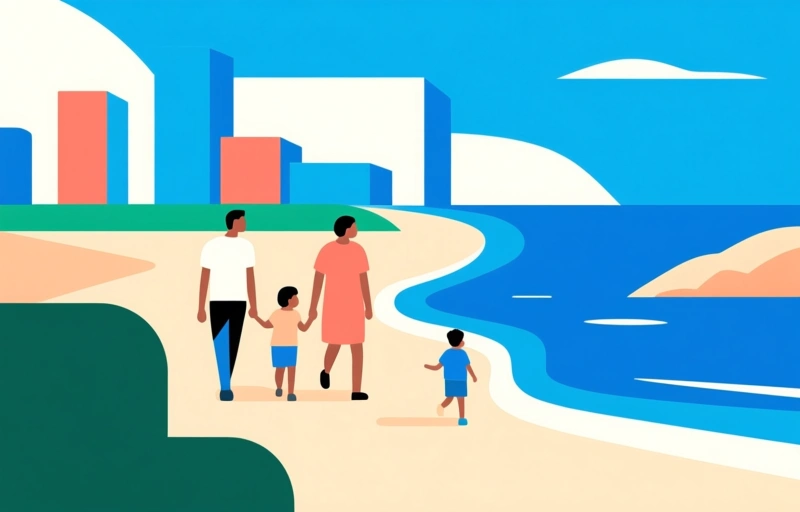
A family's quiet journey from city exhaustion to coastal calm. What began as a tired question—"What if we didn't have to live like this?"—became a transformative shift toward presence over productivity.
No one in the family remembers the exact day the idea first came up. It wasn't dramatic. There was no big announcement. Just a casual remark made at the end of a long day, somewhere between traffic and dinner getting cold.
"What if we didn't have to live like this?"
At first, it sounded unrealistic. It felt like something you say when you're tired, not something you actually do. But the thought lingered. It came back while stuck in traffic. It popped up again while answering emails late at night. It returned when the kids asked, for the third time that week, why everyone always seemed to be in such a hurry.
And slowly, quietly, something began to change.
### The Noise You Don't Notice Until It's Gone
City life has a way of becoming normal, even when it's exhausting. You get used to the constant hum — engines, notifications, schedules stacked on schedules. Days feel full, yet not fulfilling. Conversations get shorter. Meals get faster. Time feels borrowed instead of lived.
For this family, it wasn't that the city was bad. It just stopped feeling right.
What they craved wasn't escape. It was space. Space to breathe. Space to listen. Space to notice each other again.
### Trading Convenience for Presence
Moving toward the coast wasn't about upgrading a lifestyle. It felt more like peeling layers away. Fewer appointments. Fewer alarms. Fewer places to rush to.
Mornings began with light instead of traffic reports. Shoes became optional. Breakfast took longer, not because anyone planned it that way, but because no one was in a hurry to leave.
The kids changed first. They slept better. Asked different questions. Started inventing games instead of asking for screens. Dirt under fingernails replaced polished shoes, and somehow, that felt like progress.
The adults followed, slowly.
### Learning a New Rhythm
Life near Santa Teresa didn't come with instructions. There was an adjustment period — moments of doubt, moments of missing old routines, moments of wondering if slowing down meant falling behind.
But then something unexpected happened. The days didn't shrink. They expanded.
Without the constant pressure to optimize every hour, time softened. Conversations stretched. Walks turned into talks. Meals turned into gatherings. Silence stopped feeling awkward and instead was recharging.
The family began measuring their days differently — not by what they got done, but by how they felt when the day ended.
### The Practical Shifts That Made It Work
Making this kind of change isn't just about location. It's about mindset and practical adjustments. Here's what this family found most transformative:
- Letting go of the 'productivity guilt' that comes from not filling every minute
- Embracing natural light and outdoor time as non-negotiable parts of the day
- Creating tech-free zones and times, especially during meals and family time
- Learning to appreciate the value of 'empty' time for creativity and connection
- Building community through local engagement rather than digital networks
One afternoon, after walking the trails near The Ark Costa Rica, one of the kids said something simple: "I like who I am here."
That sentence landed heavier than any spreadsheet or plan ever could. Children don't romanticize lifestyle changes. They feel them.
Here, they felt more grounded. More confident. More themselves. They learned where food came from. They learned names of plants. They were free to move and play, and explore. They learned that adults could work without disappearing behind screens all day. They learned that community wasn't something you joined online, but something you built through shared experiences.
### The Quiet Realization
Looking back, the family realized something important. They hadn't just changed their address. They'd changed their relationship with time itself. The coastal life wasn't about doing less — it was about being more present in whatever they were doing.
The constant background noise of city life had been masking something fundamental: their own thoughts, their connection to each other, their sense of what truly mattered. When that noise faded, what remained wasn't emptiness. It was clarity.
It's not that every day became perfect. There were still challenges, still moments of frustration. But the quality of those challenges changed. They became about living well rather than just getting through.
As one parent put it, "We didn't find more time. We found better time." And in the end, that made all the difference.