Roping Through Generations: A Montana Rodeo Legacy
Lucía Torres ·
Listen to this article~4 min
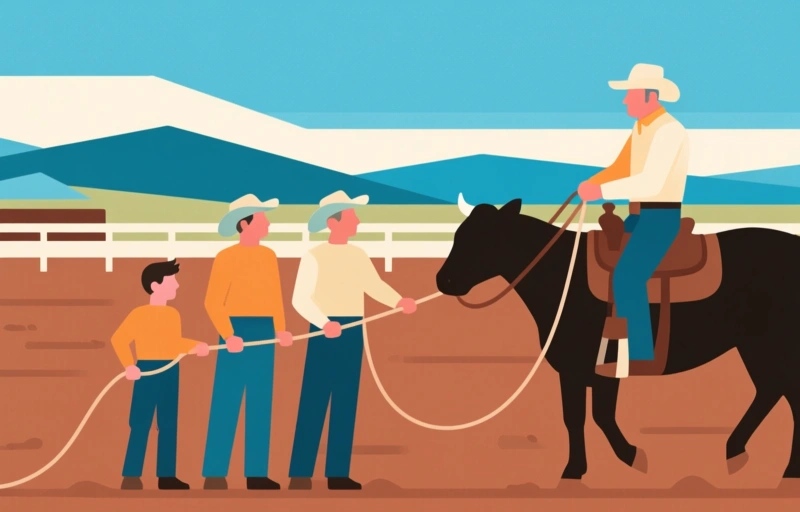
In Montana, the rope doesn't just catch cattle—it binds generations. RJ Patterson's rodeo legacy spans three generations, from his grandfather to his own sons. A story of grit, tradition, and the quiet pride of passing something real down the line.
### The Rope That Ties Us Together
In Montana, the rope doesn't just catch cattle. It binds generations. For RJ Patterson, rodeo started before he could walk. His grandfather lived the cowboy way. His father refined it. And now his son has made it his own.
That's not just a story about sport. It's about grit, inheritance, and the quiet pride of passing something real down the line. This is what a legacy looks like from the inside.
### Early Mornings Under a Big Sky
Patterson's days began at 6 a.m. under Montana's endless sky. Practice sessions weren't just drills. They were lessons in discipline, patience, and respect for the livestock and the land. His father would stand by the chute, coffee in hand, offering small corrections that stuck for a lifetime.
"You don't learn to rope in a day," Patterson says. "You learn it over years, and you learn it from people who've been doing it longer than you've been alive."
### From the Box to the Scholarship
That dedication paid off. Patterson earned a rodeo scholarship at the University of Montana. It was a chance to compete at a higher level and study the business of ranching. He learned not just how to throw a loop, but how to manage a herd, read the weather, and negotiate a fair price for land.
Rodeo taught him something else too: how to handle failure. A missed loop, a bad draw, a buck-off. Those moments built resilience. They also built character.
### Watching His Boys Take the Reins
Now, Patterson watches his own boys back into the box with fire in their eyes. They've got the same hunger he had. The same focus. The same stubborn Montana pride. He sees his father's hands in their grip on the rope. He hears his grandfather's voice in their quiet confidence.
It's not about trophies. It's about tradition. It's about showing up every day, even when it's cold, even when you're tired, even when the horse doesn't want to cooperate.
### The Economics of a Rodeo Life
Rodeo isn't cheap. A good rope costs around $60. A quality saddle can run $2,000 or more. Feed for a horse during the winter months might hit $300 per month. And that's before you factor in vet bills, travel to competitions, and entry fees that can range from $50 to $200 per event.
But for families like the Pattersons, it's not about the money. It's about the life. The life of early mornings, hard work, and the smell of leather and hay. The life of passing down skills that can't be learned from a screen.
### What a Legacy Really Looks Like
From the outside, a rodeo legacy might look like a collection of belt buckles and ribbons. From the inside, it's something deeper. It's the memory of your father's hands teaching you to tie a hondo knot. It's the sound of hooves on packed dirt. It's the way a family gathers around a campfire after a long day of practice.
Patterson's story isn't unique in Montana. But it's worth telling because it reminds us what matters: family, hard work, and the land we stand on.
- A grandfather who lived the cowboy way
- A father who refined it
- A son who made it his own
That's the rope that holds it all together.
### Passing It On
As Patterson looks ahead, he knows the legacy will continue. His boys will teach their own children. The rope will pass from hand to hand. And under that big Montana sky, the tradition will keep going.
Because in the end, rodeo isn't just a sport. It's a way of life. And for the Pattersons, it's the only way they know.