Spring's Early Bloom: The Sôte d'Azur's Scented Investment…
Lucía Torres ·
Listen to this article~4 min
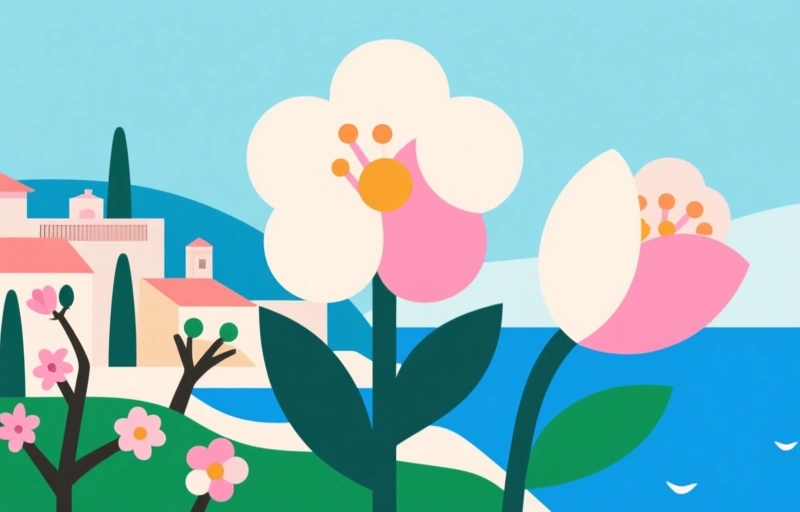
A Vespa ride through the hills above Cannes reveals the Côte d'Azur's secret: spring arrives early. Explore how mimosa, violets, and the perfume capital of Grasse create an intangible ecosystem that sustains long-term value in this legendary region.
This morning, I buckled my helmet, slid on my sunglasses, and took my Vespa into the hills north of Cannes. The air was cool and crisp. The light was sharp and clear. And everywhere—there was scent.
It's February. But here on the French Riviera, winter just sort of melts away. It leans gently toward spring long before the calendar says it should.
Mimosa explodes across the landscape. It's that electric yellow against a sharp blue sky. Violets push through shaded garden beds. Oranges hang heavy over old stone walls, perfuming the air as I ride past. On the Côte d'Azur, you can travel through seasons in under an hour. It's a sensory journey that tells a deeper story about value.
### From Tannery Stench to Perfume Capital
Let's talk about Grasse. It's the world's perfume capital, but it didn't start with glamour. Back in the 1600s, it was famous for leather tanning. And let me tell you, the smell was... formidable.
Local glove makers had a clever idea. They started scenting their leather goods to cover up the odor. Those perfumed gloves made their way to the French court. A local problem sparked a global industry. That industry built immense influence.
Houses like Galimard (founded 1747), Molinard (1849), and Fragonard (1926) anchored the town's legendary status. Later, giants like Dior, Guerlain, and Chanel came here for flowers and expertise. The luxury here has always been layered. It's craftsmanship, perfect climate, and impeccable timing all working in harmony.
### The Flowers That Built a Region's Identity
Now, about the flowers themselves. In villages like Tourrettes-sur-Loup, violet farming once supported forty families. Queen Victoria helped popularize the local variety during her winters in Nice. Violet is soft, powdery, and understated. It's never loud, always refined.
Then there's mimosa. It was imported from Australia in the 1800s. The *acacia dealbata* thrives so vigorously in Provence that it actually needs careful management. But when it blooms—right in the heart of winter—it turns entire hillsides into fields of gold.
And along the coast, February brings a spectacular floral event. The Carnaval de Nice, founded in 1873, is one of the world's oldest. Its famous 'Bataille de Fleurs' (Battle of Flowers) turns the Promenade des Anglais into a moving stage. Floats are layered in fresh blooms, and performers toss bouquets into cheering crowds.
In winter, this region doesn't retreat. It blossoms. Literally.
I rode through the carnival's hustle and bustle and ended up in Tanneron. After a long day (and a rather tired backside), I found a delightful cafe surrounded by golden mimosa. It was a perfect reminder. A reminder of what makes this place special, and how fortunate I am to experience it.
Here's the real insight for professionals like us:
- The true luxury of the Côte d'Azur isn't just bricks and mortar.
- It's the intangible ecosystem: the legendary light, the pristine air, the historic scents, the deep cultural heritage.
- These are the elements that surround and elevate the physical asset.
We talk a lot about prime locations and long-term value. But what *sustains* that value is something more profound. It's a region with an evergreen appeal, a place that never truly goes dormant.
As one local perfumer told me, "The land here is always working, even when you don't see it."
Spring arriving early isn't just a nice seasonal detail. It's a fundamental part of the investment narrative. It speaks to resilience, desirability, and a climate that delivers year-round allure. That's a story that holds its value.